
How to Teach Kids to Grow Food: School Garden Ideas That Actually Work (With Real STEM Outcomes)
If you want kids to understand where food comes from, there’s one method that consistently works better than lessons, videos, or worksheets: Let them grow it.
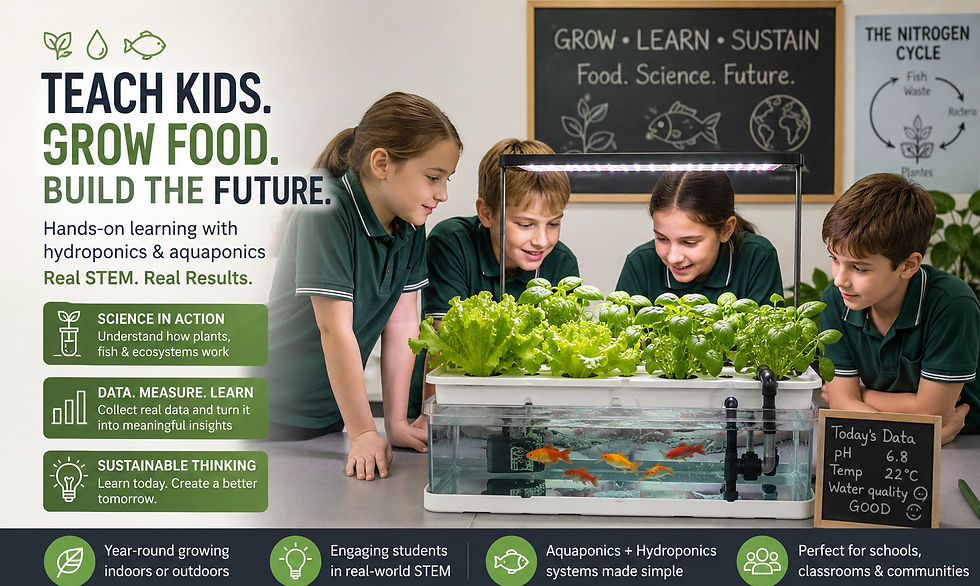
But today’s school gardens don’t need to look like traditional dirt patches in the sun. With modern systems like hydroponics, aquaponics, and indoor grow setups, food education can now happen in classrooms, hallways, and even indoors year-round.
That’s where solutions like those from Urban Green Farms become especially relevant—because they bridge the gap between education, sustainability, and real food production systems.
Why Modern School Gardens Are Changing
Traditional school gardens often fail for simple reasons:
seasonal limitations
high maintenance requirements
inconsistent watering and care
lack of long-term structure
Modern systems solve this by shifting from soil-based gardening to controlled growing environments:
hydroponics (soil-free plant growth using nutrient water)
aquaponics (fish + plants working in a closed loop ecosystem)
indoor LED grow systems (year-round controlled light environments)
These systems turn gardening into a repeatable STEM platform, not a seasonal activity.
How Do I Teach Kids to Grow Food Today?
The modern approach focuses on systems, not soil.
1. Start With Hydroponics (Fast Feedback Learning)
Hydroponic systems allow students to:
see roots growing in real time
measure growth daily
control nutrients and water cycles
This is where companies like Urban Green Farms are increasingly used in education settings—because hydroponic kits remove the complexity of soil while increasing visibility of plant science.
Why it works for STEM:
biology (plant growth cycles)
chemistry (nutrient solutions)
mathematics (growth tracking and data logging)
2. Introduce Aquaponics (The Ecosystem Model)
Aquaponics takes learning further by combining:
fish (nutrient source)
bacteria (conversion system)
plants (nutrient absorption)
Students quickly understand:
natural ecosystems
nitrogen cycles
cause and effect in living systems
Instead of abstract diagrams, they see a working ecosystem in real time.
STEM outcome: systems thinking and environmental science comprehension.
3. Use Indoor LED Grow Systems for Year-Round Learning
One of the biggest limitations in traditional school gardening is seasonality.
LED grow systems solve this by enabling:
indoor cultivation year-round
controlled light cycles
predictable plant growth
This allows lessons to continue through winter without interruption.
School Garden Ideas That Actually Work (Modern Version)
Instead of traditional soil gardens, high-performing schools are shifting to:
🌱 1. Hydroponic Classroom Stations
Small countertop systems where students:
monitor plant growth daily
track water and nutrient changes
compare growth rates between setups
🐟 2. Aquaponic Ecosystem Tanks
Live fish + plants systems that teach:
biology in action
ecosystem balance
sustainability concepts
💡 3. LED Grow Light Growth Labs
Indoor setups where students:
experiment with light intensity
test plant response variables
run controlled scientific trials
📊 4. Data-Driven Plant Science Projects
Students collect:
height measurements
leaf count
harvest weight
Then convert data into graphs and reports—turning gardening into a full STEM curriculum module.
STEM Projects With Real Outcomes
This is where modern gardening becomes powerful.
Experiment 1: Nutrient Concentration vs Growth Rate
Students test different nutrient strengths in hydroponic systems.
Outcome: understanding chemical concentration effects.
Experiment 2: Light Spectrum Testing (LED Systems)
Using grow lights, students compare:
red/blue spectrum
full-spectrum light
natural light
Outcome: plant physiology and photosynthesis understanding.
Experiment 3: Aquaponic System Balance
Students observe:
fish health
plant growth response
water clarity changes
Outcome: ecosystem equilibrium concepts.
Why Urban Green Farms Systems Fit This Shift
The reason modern schools and households are turning to systems like those at Urban Green Farms is simple:
They reduce gardening into something structured, measurable, and repeatable.
Instead of:
“Hope the garden grows”
It becomes:
“Let’s test, measure, adjust, and improve”
That is real STEM learning.
The Bigger Shift: From Gardening to Food Systems Education
We are no longer just teaching kids to grow plants.
We are teaching:
how food systems work
how ecosystems interact
how data influences outcomes
how sustainability works in practice
Hydroponics and aquaponics are not just tools—they are living science labs.
The future of school gardening isn’t in bigger outdoor spaces.
It’s in smarter systems:
hydroponics
aquaponics
LED-controlled indoor gardens
And platforms like Urban Green Farms are helping make those systems accessible for both education and home use.
Because once kids see food growing in real time, indoors, all year round—they don’t just learn science.They understand it.


The physics in eggy car remind me of old-school flash games, but smoother. Perfect game when you only have a few minutes free.
Using an instagram reel downloader has honestly made managing content much easier for me. Whenever I find a reel with good tips, tutorials, or funny moments, I just save it instantly and revisit it whenever I want without worrying about losing it in my feed.