
Start Small, Win Big: Why Schools That Begin with Small Garden & Hydroponic Systems Are More Likely to Secure Grants
Why Starting Small Is the Smartest Grant Strategy for Schools
Across Australia, schools are investing more than ever in STEM education, sustainability programs, and outdoor learning environments. But there’s one key factor that often determines whether a grant application succeeds or fails: Evidence of impact
And the easiest way to build that evidence?
Start with a small, visible, working system first.
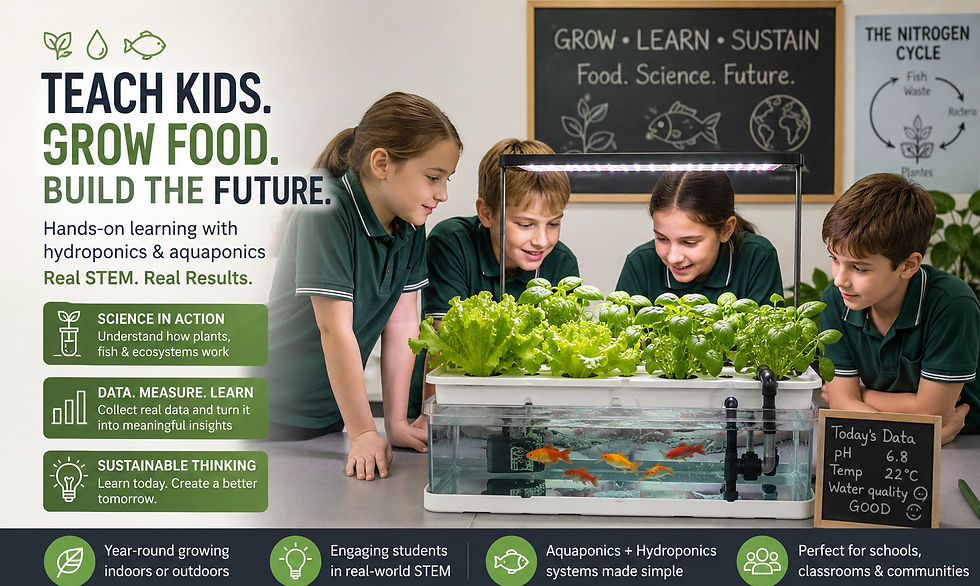
Why Grant Assessors Prefer “Proven Pilot Projects”
Grant providers don’t just fund ideas, they fund evidence-backed outcomes.
Schools that begin with:
desktop hydroponic systems
small garden beds
indoor propagation kits
classroom aquaponics units
are far more likely to succeed later when applying for larger funding.
Why?
Because they already have:
✔ student engagement data
✔ photos of learning in action
✔ curriculum-linked outcomes
✔ proof the project actually works
Small Systems That Build BIG Grant Success
Here are the most effective “starter systems” schools are using:
Desktop Hydroponic Systems
Perfect for classrooms and STEM labs.
Students can:
track plant growth daily
test nutrients and water cycles
collect measurable data
This becomes powerful evidence for STEM grant applications
Mini Indoor Garden Kits
Low cost, high engagement tools.
Used for:
science experiments
sustainability lessons
food education
Easy to implement and document for funding reports
Seed Propagation & Grow Light Kits
Ideal for early-stage learning.
Students learn:
germination science
environmental conditions
plant lifecycle concepts
Excellent for linking to curriculum outcomes
Small Aquaponics Units
A living ecosystem in the classroom.
Students explore:
fish + plant relationships
nutrient cycles
water sustainability
One of the strongest STEM grant assets available
How This Directly Improves Grant Success Rates
When schools apply for grants AFTER running a small pilot program, they can show:
✔ Real engagement
Students actively participating, not just planned theory.
✔ Real outcomes
Photos, data, growth results, learning evidence.
✔ Real scalability
Proof the idea works and can be expanded.
This is exactly what grant assessors are looking for.
The Winning Grant Strategy (Used by Successful Schools)
Most high-success schools follow this structure:
STEP 1: START SMALL
Install a:
desktop hydroponic unit
small garden system
or classroom grow kit
STEP 2: COLLECT EVIDENCE
student photos
lesson outcomes
engagement reports
STEP 3: APPLY FOR GRANTS
Use real data to apply for:
$5,000–$50,000 sustainability grants
STEM innovation funding
school garden expansion programs
STEP 4: SCALE UP
Expand into:
full outdoor gardens
greenhouse systems
integrated STEM learning hubs
Why This Works in Australia Right Now
Australian grants are heavily focused on:
STEM engagement
sustainability education
environmental awareness
hands-on learning
And nothing demonstrates this better than a working system already in place
The Key Insight Most Schools Miss
Many schools try to:
“Get funding first, then start the project”
But successful schools do the opposite:
Start the project first → then apply for funding with evidence
How Urban Green Farms Helps Schools Win Grants
At Urban Green Farms, we help schools:
✔ choose the right starter system
✔ implement small-scale hydroponics & garden setups
✔ document learning outcomes
✔ prepare high-success grant applications
Ready to Start Small and Scale Big?
If you’re planning a STEM, sustainability or outdoor learning program, the smartest first step is simple: 👉 Start with a small system that works in your space👉 Build real evidence👉 Then scale with grant funding
Get in touch
The schools that win grants aren’t always the ones with the biggest ideas…They’re the ones with the best evidence.
And evidence starts small.


Outdoor seating beneath a patio cover can provide a comfortable place for conversations and gatherings. Sofas, lounge chairs, benches, and tables can be arranged according to the available space and intended use. Weather-resistant furniture is generally appropriate for outdoor environments, although protective covers and routine maintenance may still be helpful. The overhead structure provides Custom Patio Covers Colorado additional shelter while creating a defined social area. Thoughtful furniture placement can make a covered patio comfortable for both small family moments and larger gatherings.
The explanations are clear and beginner friendly without feeling confusing. I checked Slope2 and appreciated the smooth performance, endless paths, and entertaining gameplay style. It is worth trying for users who enjoy fast online games with simple mechanics and challenging levels.
I’m from Brisbane, Australia and actually discovered this page because someone sitting near me at a café was playing roulette on their tablet while waiting for coffee. The interface looked cleaner than most gaming platforms I’d seen before, so later that evening I searched for it myself. After opening Cleobetra Casino I noticed the games loaded quickly even on my older laptop, which honestly surprised me. I mostly played live card games while listening to music and trying to ignore how badly my football team was losing that night. The session started terribly