
What Is Aquaponics?
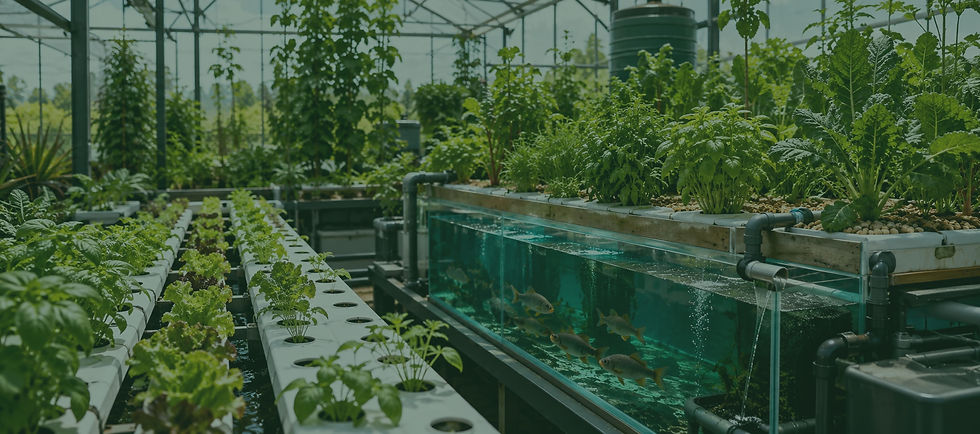
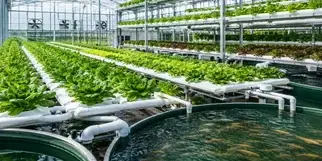
Aquaponics is a sustainable growing method that combines fish, plants and beneficial bacteria in one connected system. Instead of growing plants in soil, aquaponics uses nutrient-rich water.
Fish produce waste, beneficial bacteria convert that waste into plant-available nutrients, and the plants help filter the water before it returns to the fish. The result is a natural, recirculating growing system that can produce fresh herbs, leafy greens, vegetables and fish using less water than traditional soil-based growing.
How Does Aquaponics Work?
Aquaponics is a natural, closed-loop growing system where fish waste is transformed into powerful plant nutrients.
The result is a highly efficient, low-maintenance system that produces fresh food with minimal water and maximum nutrient uptake.
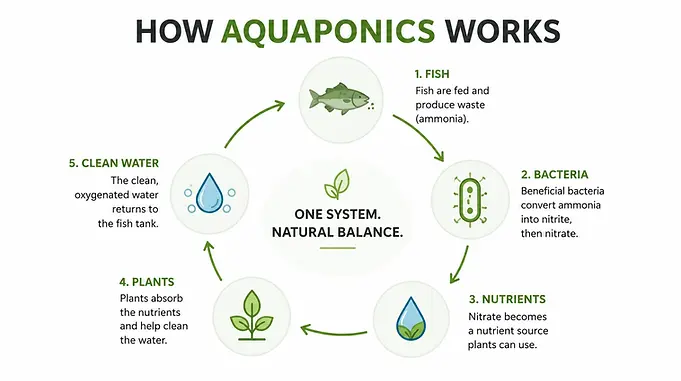

Fish produce waste

Beneficial bacteria convert waste

Plants absorb nutrients

Clean water returns to fish
Benefits of Aquaponics

90% Less Water
Aquaponics recirculates water instead of constantly draining and replacing it. Water is reused through the system.

Faster growth
Supports faster, more consistent growth when the system is balanced.

Natural Nutrient Cycling
Fish waste becomes part of the nutrient cycle. Instead of relying only on external fertilisers, the system uses biology to convert waste into plant food.


Year Round Growing
With the right system design, lighting and temperature control, aquaponics can support food growing throughout the year.

STEM Education
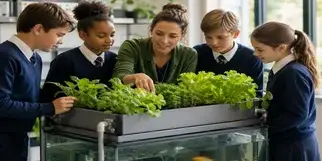
Aquaponics is one of the best practical learning tools because it connects biology, chemistry, sustainability, food production, water management and STEM learning in one system.
Aquaponics For Every Growing Environment
Aquaponic FAQs
Is aquaponics better than hydroponics? Aquaponics and hydroponics are different systems. Hydroponics uses a nutrient solution to feed plants directly. Aquaponics uses fish, beneficial bacteria and nutrient-rich water to support plant growth. Hydroponics is usually more controlled, while aquaponics is more biological and ecosystem-based.
Does aquaponics need soil? No. Aquaponics does not use soil. Plants grow in media beds, grow beds, floating rafts, vertical towers or hydroponic-style channels, with their roots accessing nutrients from the water.
What can you grow in an aquaponic system? Aquaponics is well suited to leafy greens and herbs such as lettuce, basil, mint, parsley, coriander, kale, spinach, silverbeet and Asian greens. With the right system design and nutrient balance, crops such as tomatoes, cucumbers, chillies and strawberries can also be grown.
What fish can be used in aquaponics? Common fish used in aquaponics include goldfish, silver perch, jade perch, trout, barramundi and ornamental fish. The best option depends on your climate, water temperature, system size, experience level and whether the fish are ornamental or intended for food production.
Do aquaponic systems smell? A healthy aquaponic system should not smell bad. Strong smells usually indicate poor water flow, excess waste, dead organic matter, low oxygen or an imbalance in the system. Good design and regular monitoring help prevent these problems.
Is aquaponics hard to maintain? Aquaponics is manageable once the system is balanced, but it does require regular observation. You need to monitor fish health, water flow, pH, ammonia, nitrite, nitrate, oxygen levels and plant growth. The early cycling stage is usually the most important period.
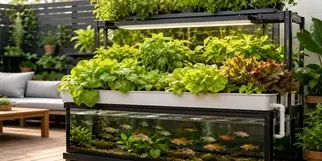
Can aquaponics be used indoors? Yes. Aquaponics can be used indoors if there is enough light, airflow, water movement and temperature control. Indoor systems usually require grow lights, especially for herbs, leafy greens and fruiting crops.
Is aquaponics good for schools? Yes. Aquaponics is one of the best practical learning tools for schools because it connects biology, chemistry, sustainability, food production, water quality and STEM learning in one live system. Students can observe fish, test water, monitor plant growth and understand nutrient cycling in a hands-on way.
How much water does aquaponics use? Aquaponics recirculates water through the system, so it generally uses less water than traditional soil-based growing. Water still needs to be topped up due to evaporation, plant uptake and system maintenance, but the same water is reused through the fish and plant cycle.
How do I choose the right aquaponics system? The right system depends on your space, budget, fish choice, sunlight, crop goals, maintenance capacity and whether the system is for a home, school or commercial project. Urban Green Farms can help match the system to your site and goals.